
SignTeam Production Notes
Coroplast, ACM, Aluminum, PVC, or Acrylic: The Honest Sign Material Guide
Most sign material questions are really one question: how long does this need to last, and outside or inside? Answer those two things and the substrate almost picks itself. This is the guide we wish every buyer read before ordering, written the way we explain it at the counter, including the parts that talk people out of spending money.
/Coroplast: cheap, light, and honestly temporary
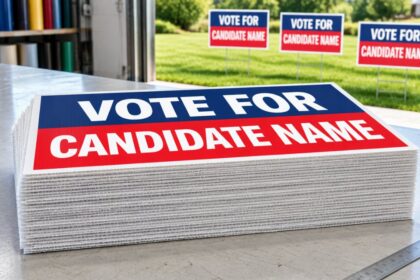
Coroplast (corrugated plastic, the material of yard signs) is the workhorse of short term signage, and it is a temporary material, period. In strong sun climates, standard 4mm coroplast gets brittle and starts cracking in about a year. In milder climates it can stretch to several years. The failure modes are always the same: UV makes the plastic brittle, reds fade first, and heat can warp panels.
None of that is a knock on it. For elections, events, real estate riders, open house directionals, and job sites, nothing touches coroplast on price and weight. The mistake is asking it to be a permanent sign.
Two upgrades matter. First, thickness: 10mm coroplast is stiffer, handles wind far better, and lasts roughly twice as long in the sun as 4mm. Second, lamination, which protects the print itself from UV and abrasion. Our rule at SignTeam is simple: if the sign will be outside for more than a month, go 10mm and laminate it. If the sign needs to survive multiple years, stop upgrading coroplast and change materials entirely.
One field tip that saves calls later: the wire H stakes that go with yard signs are consumables. They bend in hard soil, and the fix is technique (tap the horizontal cross bar, never the top of the wire) plus a few spare stakes in every bulk order.
/ACM: the modern workhorse for real signs
ACM, aluminum composite material, sold under brand names like Dibond, is two thin aluminum faces bonded to a plastic core. It is dead flat, light for its stiffness, about half the cost of solid aluminum, and it takes direct UV printing beautifully. For storefront signs, wall signs, quality real estate panels, and site signage, ACM is the default answer in the modern sign industry, and a printed panel is good for up to 5 years outdoors.
ACM also quietly replaced plywood. The traditional answer for a 4×8 construction site sign was MDO, sign grade plywood, but modern MDO quality has slipped badly, with delamination showing up within weeks on some batches. Our recommendation for 4×8 site signs is 6mm ACM: it spans between posts without warping, weighs a fraction of plywood, and does not rot. A simple frame of 2x4s with a 6mm ACM face is a proven, cost effective build for a free standing site sign.
Brand names matter less than people think here. Generic ACM performs close to name brand Dibond; the main difference you are paying for is warranty length.
/Solid aluminum: when the sign has to outlive everything
Solid .040 or .080 aluminum still wins two situations: unframed post mounted signs in high wind, where a thin composite panel can bend in strong gusts and edge damage matters, and signs that need to last decades, like parking and property signage. It costs roughly double ACM, so buy it when the application demands it, not by default. Reflective vinyl on aluminum is also the premium build for luxury real estate signs.
/PVC board: great inside, wrong outside
Here is where we regularly talk customers out of spending money badly. PVC board (Sintra is the common brand) is cheaper than ACM, and it is an indoor material. Outside it expands, warps, and cracks. Dark colors are worst because they absorb heat, and thin sheets can start potato chipping within months in full sun.
Indoors, PVC is excellent: lobby signs, hanging displays, dimensional letters, menu boards, trade show pieces. The rule is one sentence long. PVC lives inside; if the sign faces weather, spend slightly more on ACM and get a panel that stays flat for years instead of months.
/Acrylic and polycarbonate: know the tradeoff before you pick
These two get confused constantly, and they fail in opposite ways. Acrylic stays optically clear for 10+ years but cracks on impact. Polycarbonate (Lexan) is nearly unbreakable but yellows over time, sometimes within 2 to 3 years for white lit faces. So the choice is about the real risk: acrylic for lit cabinet faces and interior pieces where clarity and longevity matter, polycarbonate where impact or vandalism is the actual threat, like drive thrus and ground level exposure.
For interior lobby logo signs, clear or frosted acrylic mounted on standoffs is the premium standard look. If the budget will not stretch, white ACM gets you a similar clean modern look for meaningfully less.
/The cheat sheet
For a weekend event or election: 4mm coroplast, unlaminated, spend nothing extra. Outside more than a month: 10mm coroplast, laminated. Storefront, wall sign, or anything that should look good for years: ACM, up to 5 years outdoors from a printed panel. A 4×8 site sign: 6mm ACM, skip the plywood. Post mounted in serious wind, or a sign measured in decades: solid aluminum. Anything indoors where weight and budget matter: PVC. Lit sign faces and lobby pieces: acrylic for clarity, polycarbonate for abuse.
And the one mistake that outranks all the others: buying a cheap material twice instead of the right material once. A coroplast sign reprinted every year costs more over five years than one ACM panel, and it looks worse the whole time. When we know how long a sign needs to live, we will tell you straight which material earns its price and which one is wasted money.
More questions? The rigid signs section of our FAQ covers stakes, frames, real estate builds, and lifespans. SignTeam is a wholesale trade printer serving sign shops and resellers: browse corrugated plastic, aluminum, and PVC wholesale pricing, or call 563.296.8386.